5.18.2014

DUTCH LANDSCAPES AT THE NATIONAL GALLERY

Landscapes were a major type of painting in 17th-century Netherlands. Either as part of a gift or purchased directly by the museum, the National Gallery of Art has several superb Dutch landscapes.

River Landscape with Ferry (1649) by Salomon van Ruysdael


The painting above was originally owned by Dutch art dealer Jacques Goudstikker who fled Amsterdam during the Nazi occupation. He accidentally died on the ship on which he fled. His inventory of paintings was confiscated by the Nazis. After the war the painting was returned to the Netherlands; in 1960 it arrived at the Rijksmuseum where it remained until 2005 when it was restituted back to the Goudstikker Family. It was purchased by the museum in 2007.

A View on a High Road (1665) by Meindert Hobbema

A Wooded Landscape (1663) by Meindert Hobbema


A Farm in the Sunlight (1668) by Meindert Hobbema


Although Meindert Hobbema is viewed today as one of the premier Dutch landscape painters of the 17th century, he was basically unknown during his lifetime. Hobbema was taken on as an apprentice to the famous landscape painter Jacob van Ruisdael. In his early works Hobbema followed his mentor, but eventually developed his own style. He specialized in elaborate woodland scenes.

Herdsmen Tending Cattle (1655-1660) by Aelbert Cuyp
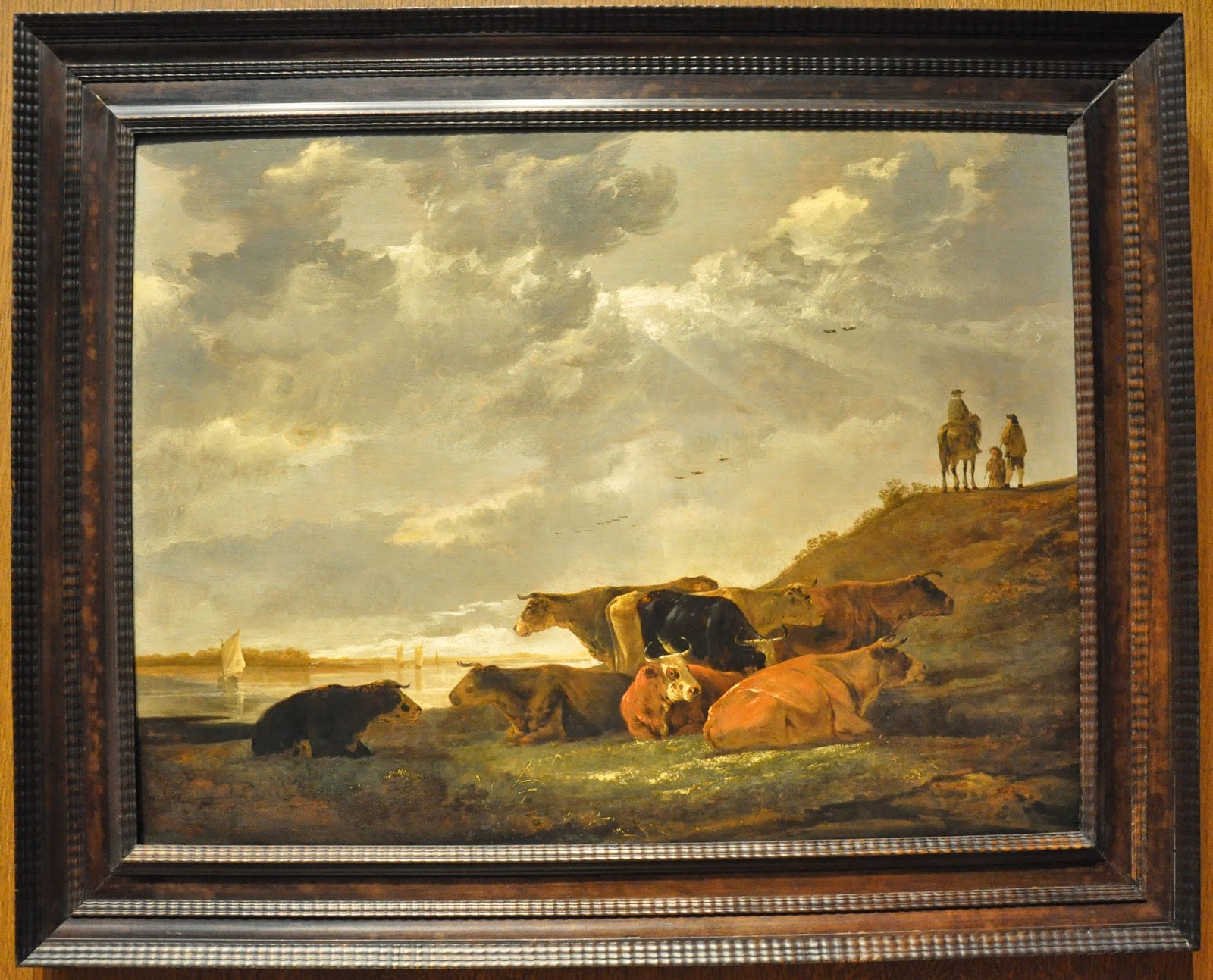
River Landscape with Cows (1645-1650) by Aelbert Cuyp


Under the threat of the Third Reich, the Petschek family, in what is now the Czech Republic, left a copy of the above painting for the Nazis to steal. The original was painted over and the family eventually escaped to the U.S. with the painting. In 1986, the family gave the painting to the National Gallery as a thank you to the U.S. for helping the family and refugees in general.

A Pier Overlooking Dordrecht (1640s) by Aelbert Cuyp (a recent gift to the museum)
The Maas at Dordrecht (1650) by Aelbert Cuyp

The masterpiece above was once rejected in the 1930s as not worthy of hanging in the Rijksmuseum in Amsterdam. Today the National Gallery of Art considers the painting one of the highlights of their museum. A change of period taste. Aelbert Cuyp, a native of Dordrecht, was one of the foremost Dutch land­scape painters of the 17th century. His father was a successful por­trait painter in the city, and from him Aelbert received his earliest training. Cuyp had also apprenticed with a landscape painter, and he soon abandoned his father’s style and subject matter and turned almost exclusively to landscapes and river­scapes. 

I will conclude my tour of the Dutch paintings in my next post, this time showing some beautiful genre and still life paintings.

Note: I normally post a photograph of just the painting in a blog post without its frame; however, the frames of many of the paintings hanging in the museum are as beautiful as the paintings. Thus, I have posted two photos of each painting: one with the frame and one without.

The National Gallery of Art is located on the National Mall between 3rd and 9th Streets along Constitution Avenue.
  • Admission is always FREE.
  • Open Monday-Saturday: 10 a.m. - 5 p.m.
  • Open Sunday: 11 a.m. - 6 p.m.
  • Closed on December 25 and January 1. 
All photos in this blog post were taken by me during my visit in September, 2013.

3.31.2014

JUDITH LEYSTER: MARRIAGE AND FRANS HALS

A few years ago I wrote a blog post about two female painters, successful during their respective times despite overwhelming male dominance.

One of those painters is Judith Leyster (1609-1660). Born in Haarlem, the most important artistic center of Holland in the early part of the seventeenth century, she was a rare female master painter during the Dutch Golden Age. This was the same time as Rembrandt and Vermeer. Leyster was so renowned as a painter that she joined the Haarlem painter's guild as an independent master in 1633, a rarity for a female painter. Her "masters" piece painting that she presented to the Guild is now a top highlight at the National Gallery:

Self-Portrait (1630)

  Another Leyster painting on view...

Young Boy in Profile (1630)

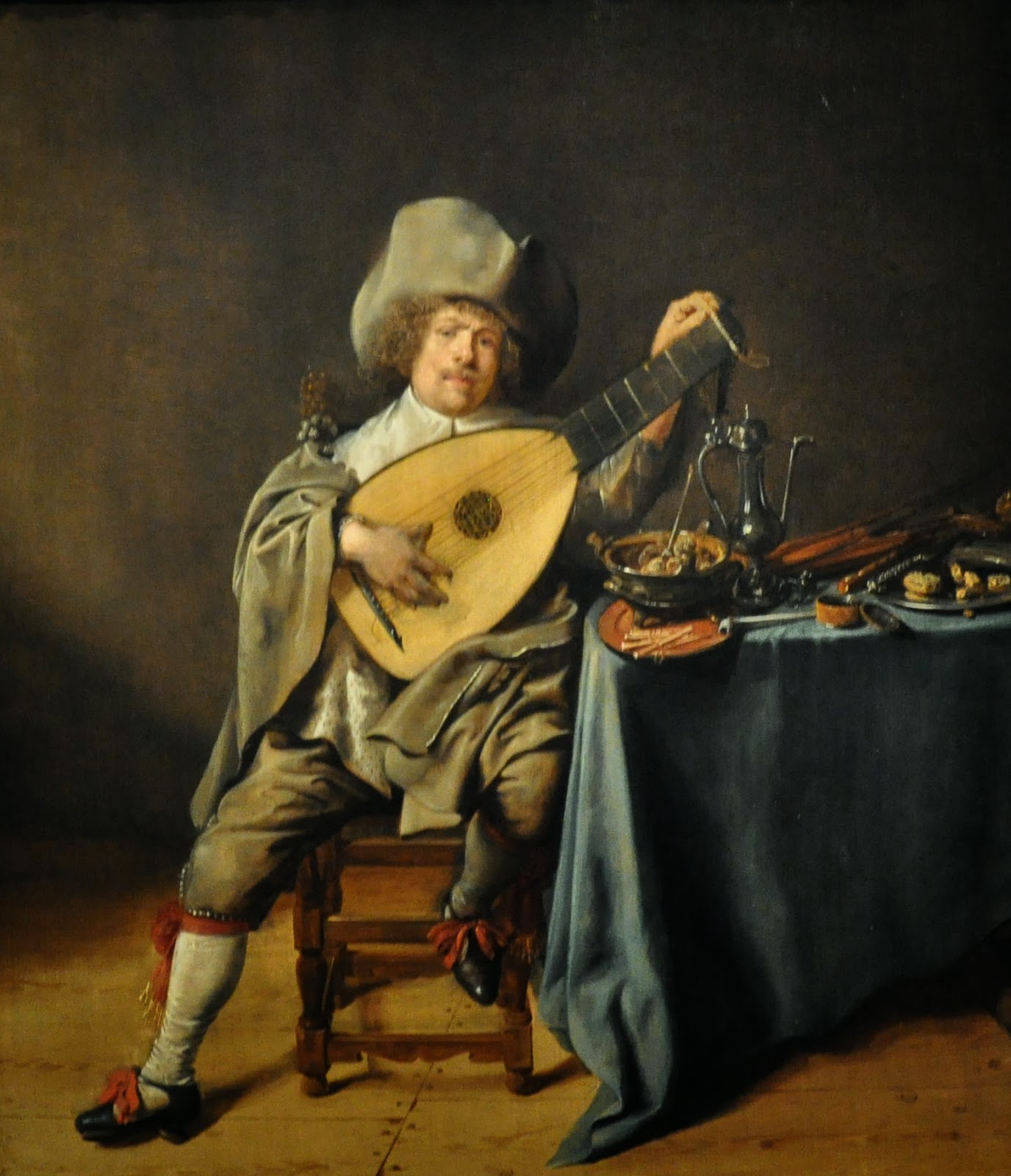
Most of Leyster's dated works are from 1629–1635. In 1636 Judith Leyster married fellow Haarlem-native Jan Miense Molenaer (1610-1668) who was known for his genre paintings or scenes of everyday life. There are no painting by Molenaer in the permanent collection of the National Gallery, but this painting from a private collection was on view:

The Lute Player (1640)


Once married with children, Leyster did not produce any paintings under her own name, but probably continued to work in collaboration with her husband.

Many times Leyster's paintings have been attributed to the most famous Haarlem painter, Frans Hals. Leyster's relationship with Frans Hals is actually unclear; she could have been a fellow painter or his student because their styles are so similar. You can compare this portrait by Hals with Leyster's self-portrait shown above.

Willem Coymans (1645)


Frans Hals was famous for his dazzling brushwork and often used informal poses to enliven his portraits.   

Portrait of a Man (1648-1650)


Adriaen van Ostade (1645/1648)


Portrait of an Elderly Lady (1633)


I will continue my tour of the Dutch collection at the National Gallery in my next blog post.

The National Gallery of Art is located on the National Mall between 3rd and 9th Streets along Constitution Avenue.
  • Admission is always FREE.
  • Open Monday-Saturday: 10 a.m. - 5 p.m.
  • Open Sunday: 11 a.m. - 6 p.m.
  • Closed on December 25 and January 1. 
All photos in this blog post were taken by me during my visit in September, 2013.

3.23.2014

THE WIDENER REMBRANDTS

In the 1870s and 1880s, P. A. B. (Peter Arrell Brown) Widener made a fortune investing in trolley cars and public transportation, beginning in Philadelphia and expanding throughout the country. With his wealth Widener, like other rich men of the late-19th century, became an avid art collector. After his death, Widener's son, Joseph, continued adding to the collection he inherited from his father, improving it by selling less-important paintings and purchasing higher-quality paintings including the Vermeer shown in the last post and over a dozen Rembrandts. In 1939, Joseph Widener, in conversations with Andrew Mellon, agreed to donate his collection as part of a founding gift to create a National Gallery of Art. In 1942, just 18 months after the museum's opening, Widener's paintings joined Andrew Mellon's in the National Gallery of Art.

These were the Widener Rembrandt paintings on view:

The Circumcision (1661). P.A.B. Widener purchased this painting from the 5th Earl Spencer, the family of Diana, Princess of Wales.


Portrait of a Gentleman with a Tall Hat and Gloves (1658/1660) P.A.B. Widener purchased this painting from Prince Felix Yusupov, best known as the assassin of Rasputin.


Portrait of a Lady with an Ostrich-Feather Fan (1658/1660) P.A.B. Widener also purchased this painting from Prince Felix Yusupov, best known as the assassin of Rasputin.


Philemon and Baucis (1658). Purchased by Joseph Widener in 1922.

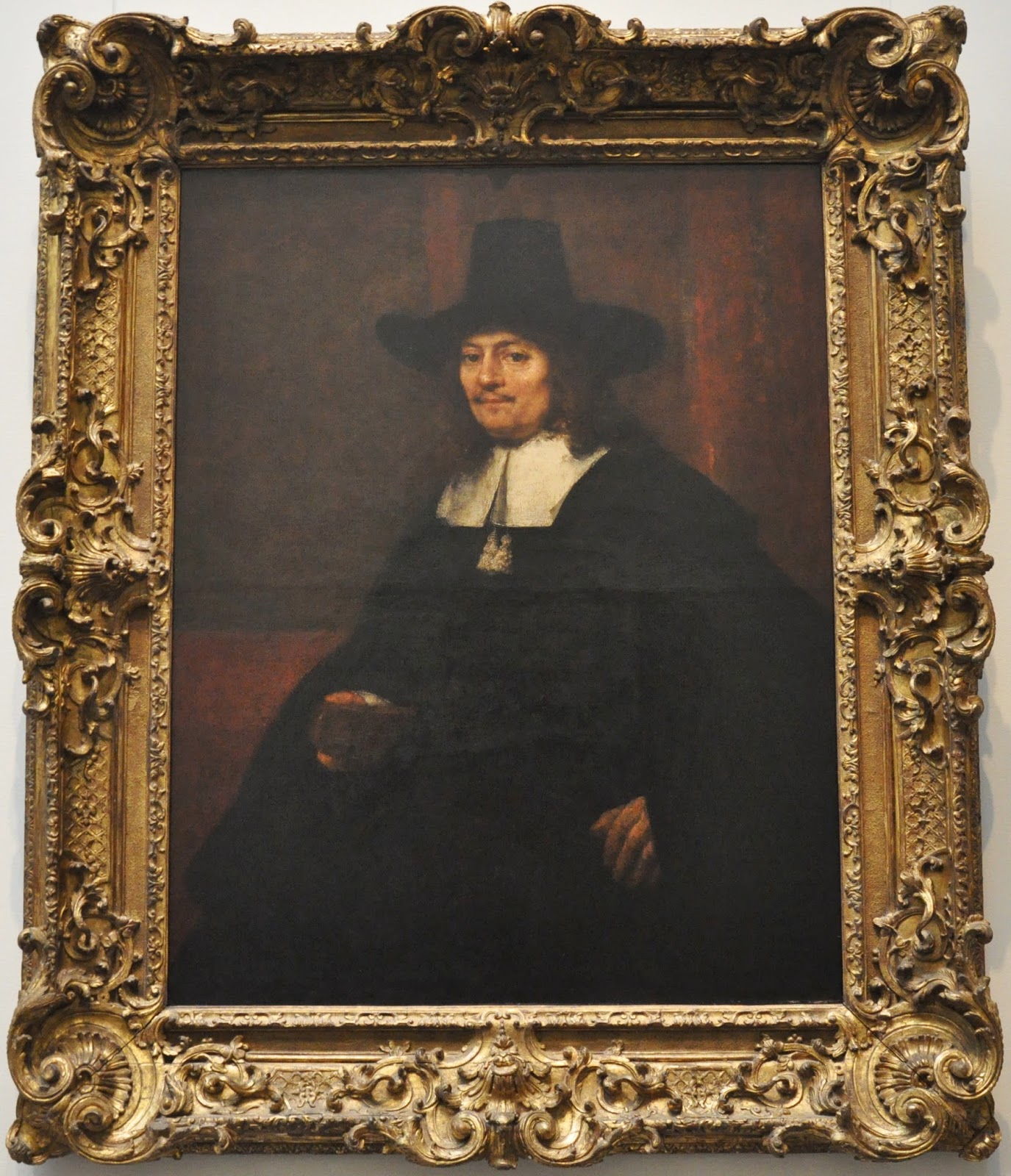
Portrait of a Man in a Tall Hat (1663). P.A.B. Widener purchased it in 1912.


The Mill (1645/1648). Even though the dramatic look of the painting was really caused by years of old varnish, art experts consider this painting to be one of Rembrandt's greatest creations.


Vermeer and Rembrandt make up a significant part of the National Gallery's Dutch collection, but there are dozens more to be seen. I'll continue showing you these paintings in my next post. 

The National Gallery of Art is located on the National Mall between 3rd and 9th Streets along Constitution Avenue.
  • Admission is always FREE.
  • Open Monday-Saturday: 10 a.m. - 5 p.m.
  • Open Sunday: 11 a.m. - 6 p.m.
  • Closed on December 25 and January 1. 
All photos in this blog post were taken by me during my visit in September, 2013.

3.15.2014

VERMEER AT THE NATIONAL GALLERY OF ART

Of course, visiting the National Gallery of Art was at the top of my wishlist when we planned our visit to Washington D.C. The National Gallery of Art was opened in 1941, thanks to the incredible generosity of Pittsburgh financier Andrew Mellon. Andrew Mellon donated his private collection of paintings and sculpture to start the museum, the funds in order to construct the building and a sizable endowment to maintain the museum. He purposely did not name the museum after himself because he wanted other major collectors, such as P. A. B. Widener, Samuel Kress and Chester Dale, to donate their art collections to create the gift to the nation that has became one of the premier art museums in the world. And the best part is admission is FREE to everyone everyday.

The highlight of the visit was seeing the four Vermeers. Considering there are only 37 known works by Vermeer in the world, to see 4 of them on one wall was unbelievable:

Woman Holding a Balance (1664). Part of P. A. B. Widener's gift to the museum.


Girl Holding a Flute (1665/1670). Part of P. A. B. Widener's gift to the museum.


A Lady Writing (1665). A gift from the Havemeyer Family.


The Girl with a Red Hat (1665). Part of Andrew Mellon's founding gift to the museum.


These four paintings are part of the vast Dutch painting collection at the National Gallery of Art. From Rembrandt to Frans Hals to Jan Lievens to Jan Steen, the Dutch collection is one of the finest in the world. I will continue my tour of the museum in my next blog post.

The National Gallery of Art is located on the National Mall between 3rd and 9th Streets along Constitution Avenue.
  • Admission is always FREE.
  • Open Monday-Saturday: 10 a.m. - 5 p.m.
  • Open Sunday: 11 a.m. - 6 p.m.
  • Closed on December 25 and January 1. 
All photos in this blog post were taken by me during my visit in September, 2013.