Showing posts with label Berthe Morisot. Show all posts

8.11.2017

LA JEUNESSE DE L'IMPRESSIONNISME

La Jeunesse de l'Impressionnisme translates from French: The Youth of Impressionism. In the 1860s, a handful of young French artists came together in the art studios of Paris from different parts of France. They were different than the painters that preceded them. They painted outdoor landscapes (en plein air) actually in the outdoors, carrying their portable easels and paints outside to capture the light as it changed throughout the day. They painted the ordinary people they saw and met as those people lived their ordinary lives in the Montmartre area of Paris. They held their own exhibitions in protest of being rejected by the famous "Salon" exhibition over and over again. And they were heavy criticized and mocked for this new way of painting for years.

But as we now know, these young artists could paint and now we love their paintings. The paintings below were included in the recent exhibition I saw at the National Gallery of Art titled Frédéric Bazille and the Birth of Impressionism. They are early works of Renoir, Monet and Morisot, painted in the "youth" of their careers, but they are early examples of the spectacular paintings each artist would later create. 

Lise Sewing: Auguste Renoir (1867-1868):
Between 1866 and 1872, Lise Tréhot was Renoir's favorite female model (and mistress) until she left Renoir to get married.  The most fascinating aspect of this superb painting, an excellent example of Renoir's talent as a painter of flesh and blood, is its provenance; it was owned by the sitter throughout her life.


The Beach at Honfleur: Claude Monet (1964):
Claude Monet grew up in the Normandy region of France so he was familiar with the beauty and landscape of Honfleur. In the early years of his career he often went back to his familiar roots.


Rue de la Bavole, Honfleur Claude Monet (1964):
A simple street scene was a typical subject of the Impressionists.


Sainte Adresse: Claude Monet (1867):
The several months Monet spent painting seascapes in the area of Sainte-Adresse, a resort town in Normandy in 1867, were very productive.


Bazille and Camille: Study for Déjeuner sur l'Herbe: Claude Monet (1865):

This painting featuring fellow Impressionist painter, Frédéric Bazille and Monet’s future wife, Camille, is a perfect example of how Monet was a genius at capturing the light with his brushstrokes.


The Harbor at Lorient: (Berthe Morisot) (1869):
Berthe Morisot, along with Mary Cassatt, were the two most notable female Impressionists. Some critics seemed to believe that Berthe Morisot was the purest "Impressionist" artist of all the painters: she tended to adhere to the basic principles of light and color in Impressionist painting.


In the next post I'll show more masterpieces from the exhibition Frédéric Bazille and the Birth of Impressionism. That exhibition was the main reason for our trip to Washington DC.

The National Gallery of Art is located on the National Mall between 3rd and 9th Streets NW along Constitution Avenue. The entrance to the East Building is on 4th Street NW.
  • Admission is always FREE.
  • Open Monday-Saturday: 10 a.m. - 5 p.m.
  • Open Sunday: 11 a.m. - 6 p.m.
  • Closed on December 25 and January 1. 
All photos in this blog post were taken by me during my visit in June, 2017.  Unauthorized use is prohibited.


3.22.2015

RECREATING MY OLD ART BLOG

Young Girl with Hat (1892) by Berthe Morisot at the Art Institute of Chicago


A fact of life is there is simply not enough time to do all of the things I would like to do. My goal is to do as many of them as I can with the time that I have. Unfortunately my true life goal (dream) of being a full-time travel/art blogger keeps getting interrupted because of my regular five-days-a-week job.

A few years ago I started an art blog titled: Tutti Capolavori, Art masterpieces and the artists who created them. I love art as much as I love to travel, and I wanted to share my favorite paintings that I encountered during my travels. I wrote a few posts, but my A Great Europe Trip Planner blog and my life caused me to put the art blog on hold. Well, I have decided to recreate the art blog (and correctly title it) as Tutti i Capolavori. 

I hope my art blog will interest you as much as my travel blog does. I will post notices when I have published a new post on the art blog so my travel readers will be aware of it. I have republished my original post in the new version of the blog.

Thank you in advance...A Great Europe Trip Planner.

7.08.2014

FRENCH IMPRESSIONISTS IN THE DALE COLLECTION


When Chester Dale bequeathed the remainder of his collection to the National Gallery in 1962, the museum's French collection increased nearly threefold. Many of the donated paintings are some of the most spectacular and beloved paintings by the French Impressionists Claude Monet, Berthe Morisot and Pierre Auguste Renoir.

The Houses of Parliament, Sunset (1903) by Claude Monet

Palazzo da Mula, Venice (1908) by Claude Monet
Rouen Cathedral, West Façade (1894) by Claude Monet


Rouen Cathedral, West Façade, Sunlight (1894) by Claude Monet


Waterloo Bridge, Gray Day (1903) by Claude Monet

Banks of the Seine, Vétheuil (1880) by Claude Monet

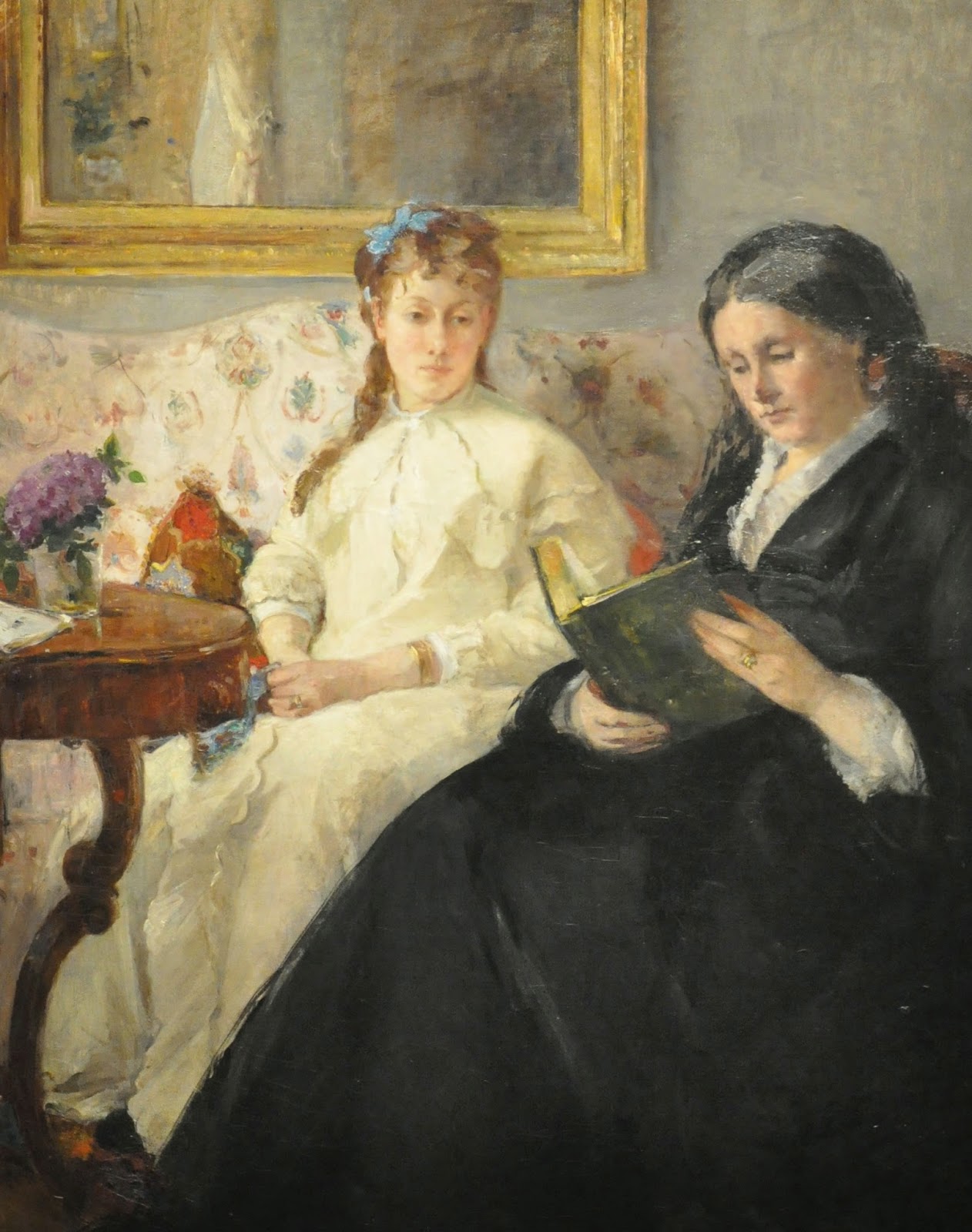
The Mother and Sister of the Artist (1869/1870) by Berthe Morisot
If you are a follower of my blog, you know that Berthe Morisot is my favorite artist.

Below is one of the museum's most beloved paintings:
A Girl with a Watering Can (1876) by Pierre Auguste Renoir

Girl with a Hoop (1885) by Pierre Auguste Renoir
Boulevard des Italiens, Morning Sunlight (1897) by Camille Pissarro


I will continue to show more of the spectacular Dale collection in my next blog post, specifically the Cézanne paintings.

The National Gallery of Art is located on the National Mall between 3rd and 9th Streets along Constitution Avenue.
  • Admission is always FREE.
  • Open Monday-Saturday: 10 a.m. - 5 p.m.
  • Open Sunday: 11 a.m. - 6 p.m.
  • Closed on December 25 and January 1. 
All photos in this blog post were taken by me during my visit in September, 2013.


2.09.2012

ART IN MY TOWN

I've written several posts about the world-class museums I've been fortunate to visit in my travels in Europe, but you know what?  I've got a world-class art museum right in my own backyard!  The Art Institute of Chicago.

The Art Institute of Chicago has one of the most renowned collections of paintings in the world.  But it's not just the collection inside the building that is famous.  The building that houses the collection is just as famous.  The exterior of the Art Institute is one of the most photographed buildings in Chicago, and the two huge lions that greet visitors at the entrance attract as much attention today as they did more than a century ago. 

They get decorated with wreaths every Christmas...


And they get into the spirit of special sports occasions such as when the Blackhawks won the Stanley Cup Championship in 2010.


But of course, it's the art collection everyone comes to see when they visit the museum.  Some of my most favorite paintings are part of its permanent collection:

Young Girl with Hat (1892) by Berthe Morisot


This is my absolute favorite painting in any museum, and Berthe Morisot is my favorite painter.  She was a rare female French Impressionist, painting at the same time as her colleagues Monet, Degas, Sisley, Renoir and Édouard Manet with whom she was romantically involved.  However, she married Eugene Manet, Édouard's brother.  Other excellent works by her are:

The Garden (1882) by Berthe Morisot


Woman at her Toilette (1875) by Berthe Morisot


One of the last visits I made to the museum I discovered this masterpiece which I had not seen on display previously:

Auvers, Panoramic View (1873/1875) by Paul Cézanne


Édouard Vuillard is one of my favorite painters.  The Art Institute has several wonderful examples of his work:

Annette Roussel with a Broken Chair (1900) by Édouard Vuillard


Vuillard's Room at the Château des Clayes (1932) by Édouard Vuillard

Madame Arthur Fontaine in a Pink Shawl (1904) by Édouard Vuillard

Woman seated on a Sofa (1906) by Édouard Vuillard


Vuillard was a member of a post-Impressionist group called The Nabis, a group of painters whose works I enjoy.  Nabi means prophet in Hebrew and in Arabic. The rebellious group of young student artists came together in the fall of 1888, and like many of the Impressionists and post-Impressionists, they were inspired by the broad planes of unmediated color, thick outlines, and bold patterns. Another fantastic example is:

The White Tablecloth (1926) by Pierre Bonnard


Another group of Post-Impressionist painters I like are the Fauvists (fauve means wild beast in French) also because of their use of bright, intense colors.  Excellent examples (such vivid colors!) in the Art Institute collection include:
   
Antwerp (1906) by Georges Braque


Landscape at L'Estaque (1906) by Georges Braque


Another one of my favorite paintings is by the Dutch painter, Piet Mondrian.  There is just something about the symmetry with the simple horizontal and vertical lines and colors and reflection in this painting that I find mesmerizing.

Farm near Duivendrecht (1916) by Piet Mondrain


Continuing on the Dutch theme and remembering my recent trip to the Netherlands, on my most recent visit to the Art Institute, I sought out any Dutch Masters paintings in the collection.  Jan Steen was one of the original 17th century Dutch Golden Age painters. He was known for painting scenes of daily life.  Many of the scenes he portrayed are lively to the point of chaos, so much so that a Jan Steen household, meaning a messy scene, became a Dutch proverb.

The Family Concert (1666) by Jan Steen


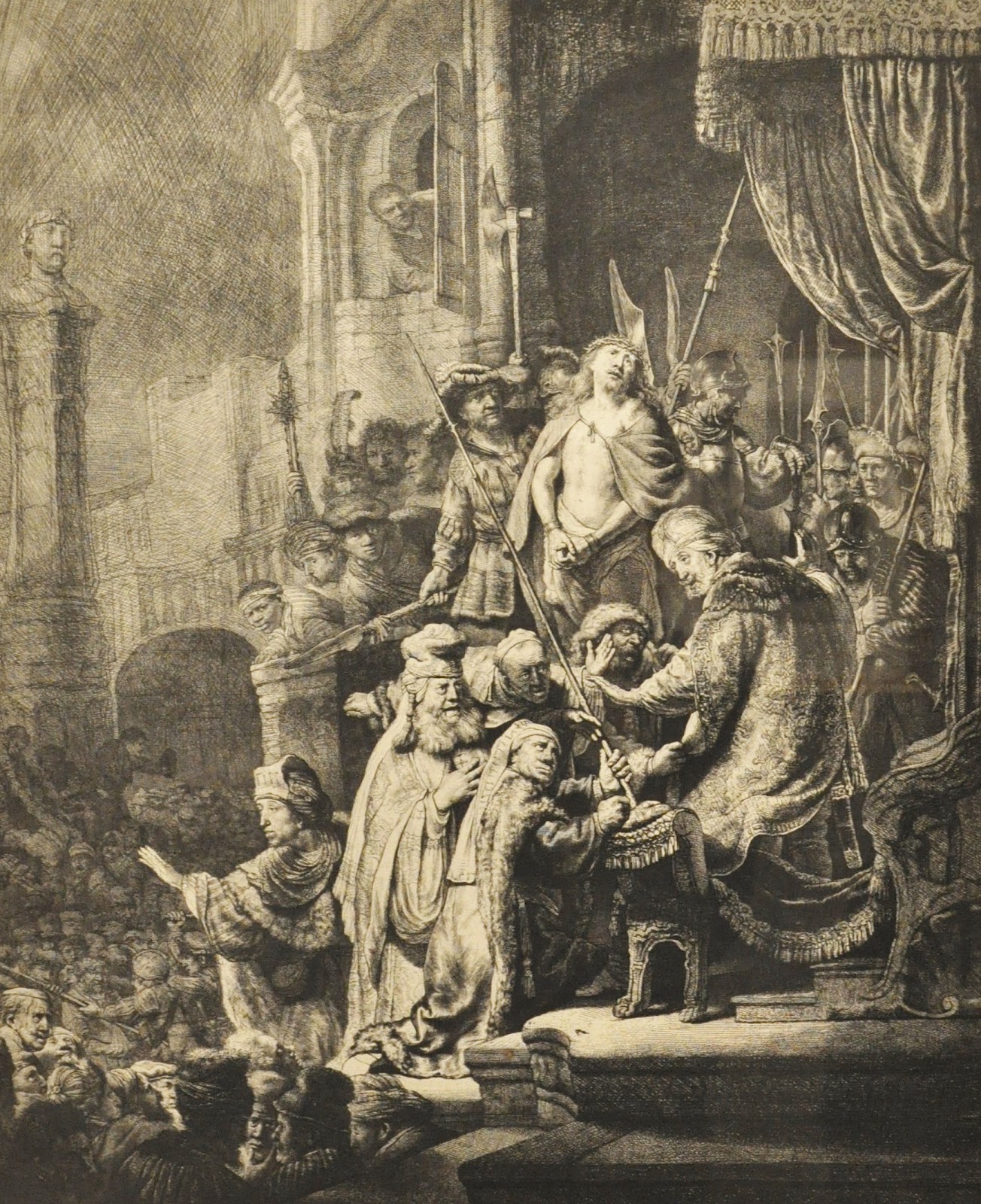
You can't speak about Dutch painters without mentioning Rembrandt. Throughout his career, Rembrandt painted powerful studies of single figures, conveying character through dramatic costume and lighting.

Old Man with a Gold Chain (1631) by Rembrandt Harmensz van Rijn


The museum has dozens of wonderful etchings by Rembrandt.  This print exemplifies the popular depiction of the Passion of Christ which often combined multiple part of the New Testament story into one overwhelming scene:

Christ Before Pilate: Large Plate (1636) by Rembrandt Harmensz van Rijn


Jan Uytenbogaert, “The Goldweigher” (1639) by Rembrandt Harmensz van Rijn

Other painters discovered on my recent Netherlands/Belgium trip were the Flemish masters, one painter being Hans Memling.  Imagine my delight in finding this diptych in the Art Institute collection.  Separated for many years, the two images were reunited in 1953.  Fortunately, the image on the left is still in wonderful condition, even after 525 years!  Unfortunately, the original matching image on the right side is in poor condition.  The image shown here on the right side is actually the back side of the original painting, Portrait of a Man in Prayer.

Virgin and Child (1485) by Hans Memling
St. Anthony of Padua (1485) by Hans Memling


Photo of the original diptych showing Portrait of a Man in Prayer.


And of course, there are the German Expressionist paintings, my love of which I wrote about in my last post.  There are some excellent German Expressionist paintings in the Art Institute's permanent collection.

Despite being raised in a country that discouraged women from careers in art, Gabriele Münter became a founding member of one of the most influential early 20th-century modernist movements: German expressionism.  In 1911 Gabriele Münter, along with Franz Marc and her lover, Wassily Kandinsky, founded the Der Blaue Reiter group, an important expressionist organization.

Still Life with Queen (1912) by Gabriele Münter


The Bewitched Mill (1913) by Franz Marc


Red-Haired Girl (1919) by Emil Nolde

Speaking of color:  You can't forget this artist:

Interior at Nice (1919 or 1920) by Henri Matisse

Women before an Aquarium (1921-1923) by Henri Matisse
 

These are just a few of my favorite paintings located in the Art Institute of Chicago.  All photos in this post were taken by me at various visits to the museum.
 
In my next post I'll continue showing many more of my favorite paintings from several different genres.
  • Admission for adults is $18.00**
  • Admission for Students and Seniors is $12.00
  • The museum is closed Thanksgiving, Christmas, and New Year’s days.
  • Open Monday, Tuesday, Wednesday 10:30-5:00.
  • Open Thursday 10:30-8:00.
  • Open Friday, Saturday, Sunday 10:30-5:00.
  • Free Family Wednesdays: Admission to the Art Institute of Chicago is free to Illinois residents the first and second Wednesday of every month.
** Chicago residents receive a $2 discount on admission in recognition of the significant support given to the museum through local property taxes. A valid photo ID with a resident address is required.

For more information, visit: http://www.artic.edu