Caravaggio. Bernini. Michelangelo. Rubens.
All world-renown artists. I have admired their works in the permanent collections of the major museums of Europe, but most paintings and sculptures are bought by the museum or donated by a patron. These works were not created for the specific purpose of hanging in the museum. However, are you aware these four artists painted and sculpted extraordinary works of art specifically for churches? The churches of Rome are a virtual cornucopia of art by these artists to be seen without the entry fees, queues or security checks.
Crazy
for the chiaroscuro of Caravaggio? Plan a walk through Rome. Start in
Piazza del Popolo. Stop in Santa Maria del Popolo to see his Crucifixion of St. Peter and The Conversion on the Way to Damascus in the Cerasi Chapel.
Crucifixion of Saint Peter (1600), Santa Maria del Popolo, Rome © Web Gallery of Art
Conversion on the Way to Damascus (1601) Santa Maria del Popolo, Rome © Web Gallery of Art
What art lover wouldn't love walking into a church to view Caravaggio masterpieces for free?
Afterwards, make your way down Via Ripetta to Via della Scrofa. This will lead you to the Basilica di Sant'Agostino to see his Madonna of Loreto...
Madonna of Loreto, Basilica de Sant'Agostino, Rome. © Wikipedia
My photo (sorry for the poor quality; I was just learning church photography):
Leave this church, walk back down Via della Scrofa. Just down the street in the church of San Luigi dei Francesi in the Contarelli Chapel, you will see three of his most famous paintings:
The Calling of St Matthew, San Luigi dei Francesi, Rome © Web Gallery of Art
My photo (sorry for the poor quality; I was just learning church photography):
The Martyrdom of St Matthew, San Luigi dei Francesi, Rome © Web Gallery of Art
My photo (sorry for the poor quality; I was just learning church photography):
The Martyrdom of St Matthew, San Luigi dei Francesi, Rome © Web Gallery of Art
My photo (sorry for the poor quality; I was just learning church photography):
TIP: Keep €1.00 and €.50 coins in your pocket specifically for those light boxes. In some cases, it's essential to "light" the art work in order to properly see it. It will be a few well-spent Euros.
Besotted by Bernini? You've taken the obligatory photos of the Spanish Steps and filled your water bottle in the boat-shaped Fontana della Barcaccia.
Fontana della Barcaccia (said to be designed by Bernini's father, Pietro)
in front of the Spanish Steps in Rome. Don't be afraid to drink the water!
 TIP: Don't be afraid to drink the water from this fountain or the Signor Nasosi (the "big nose" water faucets in the streets and piazzas). All of Rome’s fountains are aqueduct-powered. It is completely safe to fill your water bottle directly from the faucets--it's probably safer than what you drink at home!
From the Spanish Steps walk south on Via Propaganda. At the intersection of Via di Capo le Case you will see the church of Sant'Andrea delle Fratte. Inside, on either side of the altar, are two angels sculpted by Bernini in 1668 and 1669 that were originally intended to decorate the Ponte Sant'Angelo, but Pope Clement IX opposed the project, feeling the statues too important to be left exposed to the elements, so they remained in the artist's studio and were eventually donated to the church by Bernini's nephew. Like the ones on the bridge, these angels carry symbols of the Passion: the Scroll and the Crown of Thorns.
Angel with the Scroll, Sant'Andrea delle Fratte, Rome © tesoridiroma.net
My photo (sorry for the poor quality; I was just learning church photography):
Angel with the Crown of Thorns, Sant'Andrea delle Fratte, Rome © Web Gallery of Art
.jpg)
My photo (sorry for the poor quality; I was just learning church photography):
All guidebooks describe in length Bernini's masterpiece, The Ecstasy of St. Theresa
which is located in Santa Maria della Vittoria. And they're correct in
stating that this piece of art should not be missed. The entire chapel
is gorgeous.
The church gained even more popularity after it was mentioned in the bestselling novel Angels & Demons (although in the book, the church is located a couple of blocks away from its actual location.)
Bernini's The Ecstasy of St. Theresa, Santa Maria della Vittoria, Rome.
But few guidebooks mention Bernini's other "Ecstasy" sculpture, Beata Ludovica Albertoni, located in the Trastevere area. San Francesco a Ripa is a small church situated at the end of Via di San Francesco a Ripa, east of Viale di Trastevere.
Beata Ludovica Albertoni, San Francesco a Ripa, Rome © Wikipedia
TIP: In general, only the major churches in Rome are open between the hours of 13:00 and 16:00 (remember Europeans use the 24-hour clock), but do stay open until 18:00 or 19:00. Plan accordingly!
Mad for Michelangelo? OK, after a pleasant lunch dining al fresco in Piazza della Rotonda (I wanted to pinch myself as I thought, "I'm in Rome, sitting here eating a melt-in-your-mouth plate of spaghetti and the actual Pantheon is in front of me!), walk around to the left of Pantheon.
I'm eating lunch in Rome, looking right at the Pantheon. Am I dreaming?
In the small Piazza della Minerva is Santa Maria sopra Minerva, Rome's only Gothic-style church (a bit of change from all the Baroque).
In this church to the left of the altar is a statue by Michelangelo, Christ Bearing the Cross. Originally Christ was naked, but later the prudish Counter-Reformation censors added the bronze girdle.
Don't miss the little-known sculpture by Bernini on the fifth pier from the entrance, Monument to Maria Raggi.
Monument to Maria Raggi, Santa Maria sopra Minerva, Rome
More marble by Michelangelo? After eating the breakfast that is included with your room at my preferred accommodation in Rome, the Hotel Aberdeen, catch Bus #84 at the Reppublica Stop (Direction: Piazza Venezia/Campidoglio) for 5 stops to the Cavour/Annabaldi bus stop. Exiting the bus, cross the street and walk up a set of unfortunately steep stairs. At the top of the stairs will be San Pietro in Vincoli, a small basilica famous for housing Michelangelo's statue of Moses.
The tomb of Pope Julius II, featuring Moses by Michelangelo in San Pietro in Vincolo, Rome.
In 1505, Pope Julius II commissioned Michelangelo to build his tomb, a huge mausoleum for St. Peter's Basilica. Moses was to be one of the 40 statues encompassing the huge monument. Michelangelo traveled to Carrara, selecting 100 tons of marble for the project. However, progress on the project was halted over the years for many reasons: Discord between Pope and artist; Michelangelo was also busy painting some famous ceiling down the road; then Julius II died. For over 30 years Michelangelo worked on the tomb. The only statues Michelangelo actually completed himself are the Moses, Jacob’s wives Rachel (left), and Leah (right).
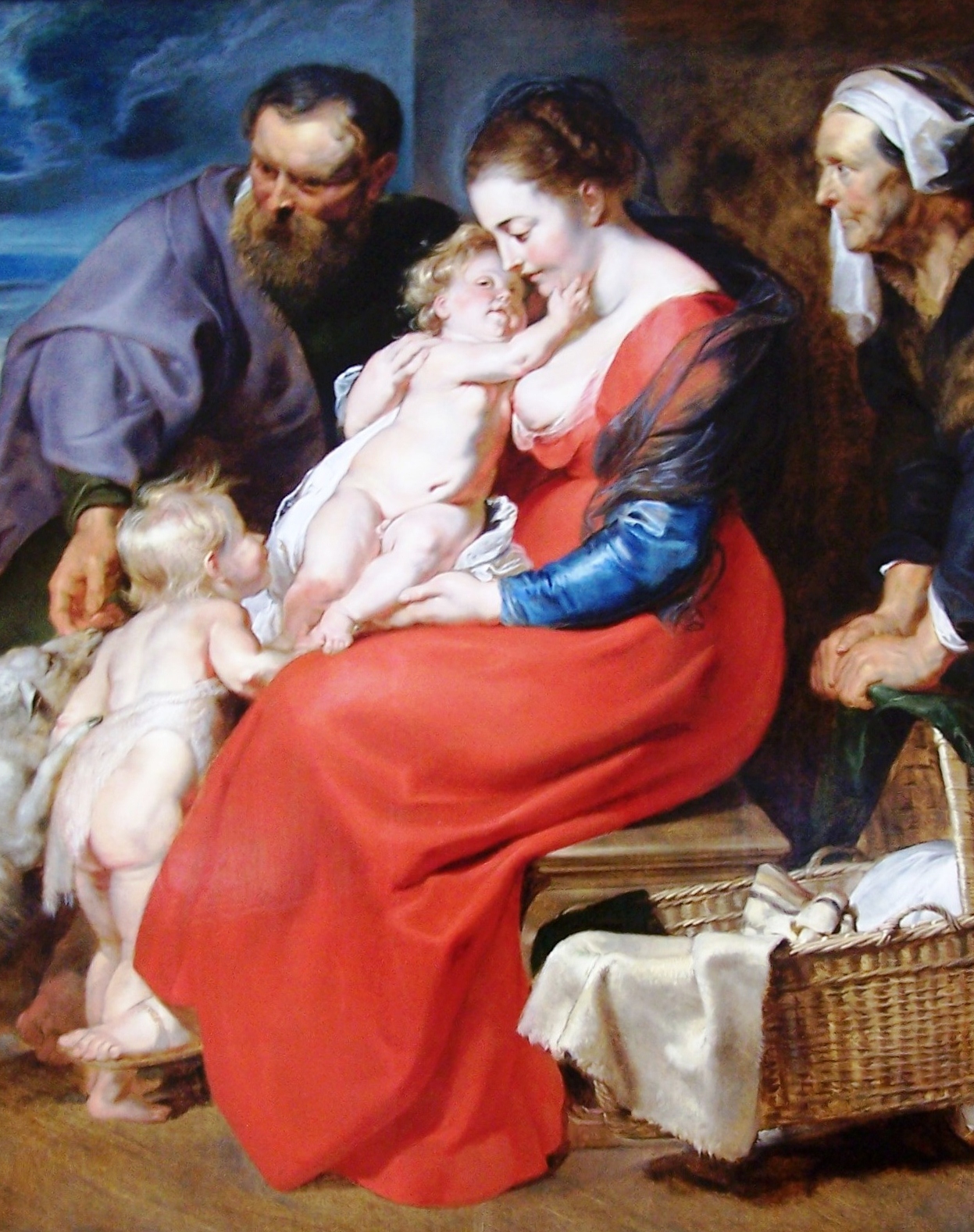
Want to relish a Rubens in Rome? This morning after breakfast at Hotel Aberdeen, walk down to Via Nazionale. Catch Bus #64 to the Chiesa Nuovo bus stop.
TIP: www.atac.roma.it is the Rome bus website. Type in your bus route number in the "Find Your Bus" space and you'll get a map showing the bus route. Bus routes #40 and #64 travel to the historic center and St. Peter's Square and you can easily catch either from Via Nazionale near Hotel Aberdeen. Want to explore the streets of Trastevere? Catch Bus H from near the Termini Station. And the cost is so cheap! One ticket costs €1.00 and lasts for 75 minutes. AND DON'T FORGET TO VALIDATE YOUR TICKETS!
TIP: Every guidebook warns about pickpockets. I have traveled to Europe three times and ridden dozens of buses and Metro trains. I've traveled with my sister, and we are both aged 50+. I've never come close to becoming a victim of a crime. Maybe it's because I work in a major U.S. city and know how to travel without inviting someone's hand into my bag. A few suggestions from me: DON'T carry a bag that doesn't have a zipper--keep the zipper closed and in front of you. If your bag doesn't have a zipper, carry the bag so the flap is facing you; DON'T set your bag on another chair or hang it behind your chair while you're eating--put in on the ground under the table or between your feet; DON'T carry a lot of cash with you--take what you need and leave the remainder in your hotel room (choose to use a moneybelt if you want--I don't.); DON'T engage in conversation with anyone who is trying to sell you something or seems shady--say no and walk away or better yet, just ignore them; DON'T wander into areas that don't seem safe especially if you're traveling solo--exploring the backstreets is one thing, but be sensible about it; If you are approached by a robber asking for your wallet or purse, DON'T hand it to him--DO toss it away from you. Chances are the robber is more interested in your money than you and he will go for it, not you. Then run like hell in the other direction; DON'T yell "Help"--rescuers may be frightened away; DO yell "Fire"--it tends to draw a crowd (But DON'T yell it in a crowded indoor place!); DO pay attention to your surroundings--it's so easy to be become distracted gaping at the wonders of Europe; DO research before you travel--knowing what you're doing and where you are going will help you not look like a totally confused tourist or become a victim of crime. You don't want something bad to ruin your trip.
Exiting Bus #64 pickpocket-free, head over to Santa Maria in Vallicella, also known as Chiesa Nuova. You'll know you've reached the church when you see the small fountain that resembles a tureen.
Inside over the main altar are three early paintings by Peter Paul Rubens: Madonna and Child Adored by Angels in the center; St. Domitilla with St. Nereus and St. Achilleus to the left and St. Gregory the Great with St. Maurua and St. Papia to the right.
Madonna and Child Adored by Angels, Santa Maria in Vallicella, Rome © Web Gallery of Art
St. Domitilla with St. Nereus and St. Achilleus, Santa Maria in Vallicella, Rome © Wikipedia
.jpg) /
St. Gregory the Great with St. Maurua and St. Papia, Santa Maria in Vallicella, Rome © web.tiscali.it
My photo (sorry for the poor quality; I was just learning church photography); however, you can see the three Rubens paintings left, center and right.
/
St. Gregory the Great with St. Maurua and St. Papia, Santa Maria in Vallicella, Rome © web.tiscali.it
My photo (sorry for the poor quality; I was just learning church photography); however, you can see the three Rubens paintings left, center and right.
I've described nine different churches in this blog post, but there are hundreds of other beautifully decorated places of worship in Rome which contain paintings and sculptures by men whose talents made Rome the spectacular city it is today. There are over 300 churches in the historic area of Rome, so get out there. Don't just concentrate on the "biggies". Some of the most beautiful churches in Rome aren't even listed in a guidebook.
Thank you for visiting,
A Great Europe Trip Planner




.jpg)


.jpg)

.jpg)


.jpg)


.jpg)
